
What does it mean to be brave? In Gizmo Goes on a Road Trip and Gizmo Goes to Yellowstone, Heidi Heisel invites young readers to discover that courage doesn’t always roar. Sometimes, it looks like a small dog climbing into the backseat, heart pounding, paws shaking, determined to see what’s beyond the next bend in the road.
Gizmo isn’t your typical adventurer. He’s adorable, cautious, and deeply relatable. When his family embarks on a cross-country road trip after quarantine, Gizmo is both excited and scared. Especially of one thing: Going-to-the-Sun Road, a steep, narrow, 6000-foot-high mountain pass in Glacier National Park. It’s the kind of place that makes even adults catch their breath. For Gizmo, it’s terrifying.

And yet, Gizmo goes.
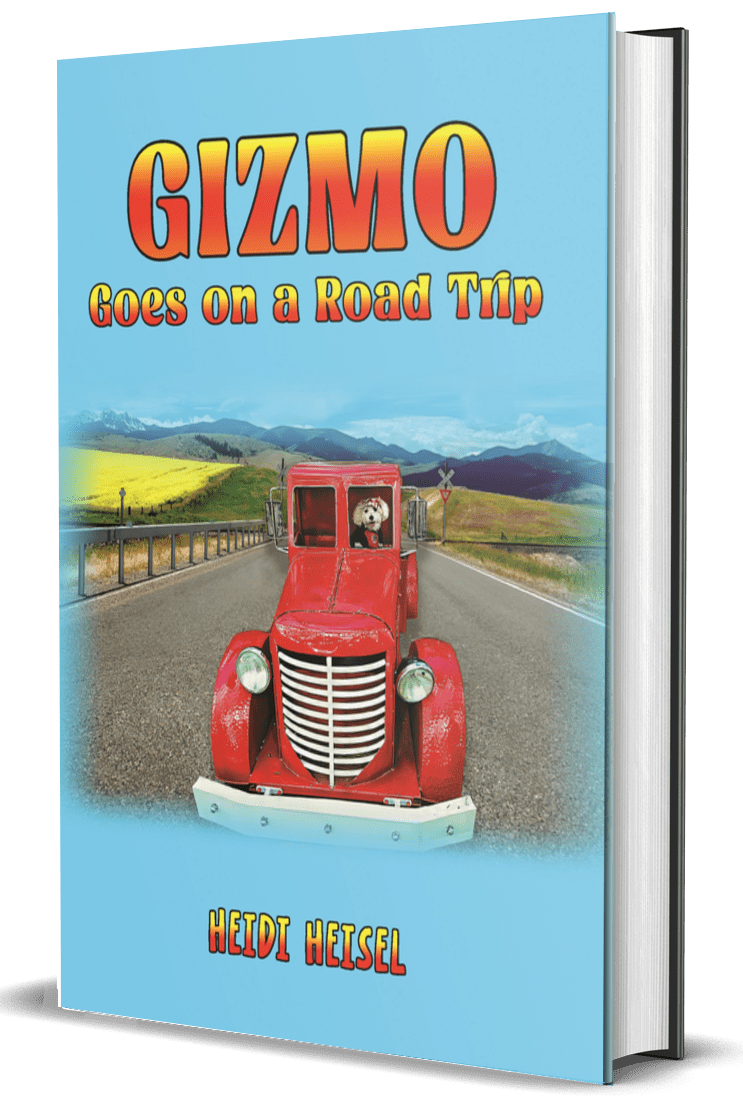
That’s the first lesson in bravery: doing it anyway. Kids see a character who doesn’t deny his fear, but also doesn’t let it stop him. Along the way, he meets new friends, learns American history, and faces natural wonders with wonder of his own. But fear always lingers. And that’s okay.
The turning point comes in Yellowstone, when Gizmo, on a personal mission to find a tail that will help him “fit in,” encounters one strange tail after another. From deer and bison to birds and wolves, none of them seem quite right. His journey becomes less about appearance and more about identity. When a wise grizzly finally appears, he tells Gizmo that standing out, not fitting in, is what makes him special.
This moment lands with impact. Fear of difference, fear of rejection, fear of failure—these are all part of childhood. Gizmo learns that bravery is not about having no fear. It’s about being afraid and trying anyway. It’s about showing up at the mountain and peeking out the window, even when you’d rather hide under the seat.
Heidi Heisel uses rhyme and imagery to give kids a mirror for their own emotions. The gentle rhythm of her language allows fear to soften, while River Wilson’s illustrations ground the story in fun, whimsical realism.
Parents can use these books as guides to talk about bravery in everyday life. Trying a new school, talking to someone new, saying “I’m sorry” or “I’m scared”—these are all brave acts. And Gizmo helps children see that they’re not alone in those feelings.
By the end of both stories, Gizmo has changed. Not because the world became less scary, but because he got stronger by facing it one pawstep at a time.
Because bravery, as these books beautifully teach, is a muscle. And every time kids read Gizmo’s story, they’re giving theirs a little more strength.